Before treatment and after — on two separate trips, because implants take 30 to 45 days to settle before the permanent tooth goes on. Same spot at the Liziba viewing platform, same hour, same pose: head back, mouth open, monorail coming out of the building. Only the smile changes.
Dental work is invisible to everyone except the person who had it done. A before-and-after x-ray persuades a clinician; it does not persuade a friend. But a pair of photographs on the same platform, weeks apart, with a monorail passing through an apartment block behind you — that travels.
Nobody invented this pose. Visitors worked it out years ago: you stand at the railing, tilt your head back and open your mouth as the train comes out of the building, and the photographer lines it up so the carriage looks like it is going in. Half of Chongqing has done it. We just make sure you do it twice, months apart, so the pair means something.
This is not a travel guide. These are the places that fit around a treatment schedule — close to Liangjiang, manageable on a healing day, and worth the photograph. Recovery-safe options are marked, and so are the ones to skip in the first three days.
Chongqing's most photographed oddity: Line 2 runs straight through the sixth and seventh floors of a residential block. The observation platform opposite was designed with a 33-degree camera angle, so you do not have to hunt for the shot. Trains every three to five minutes.
This is also where the city’s most practised photo ritual happens. When a train approaches, everyone on the platform turns, tips their head back and opens their mouth, and the person holding the phone times it so the carriage appears to slide straight in. It is silly, it is free, and everybody does it. Your pair is taken here — once before treatment, once on the second trip.
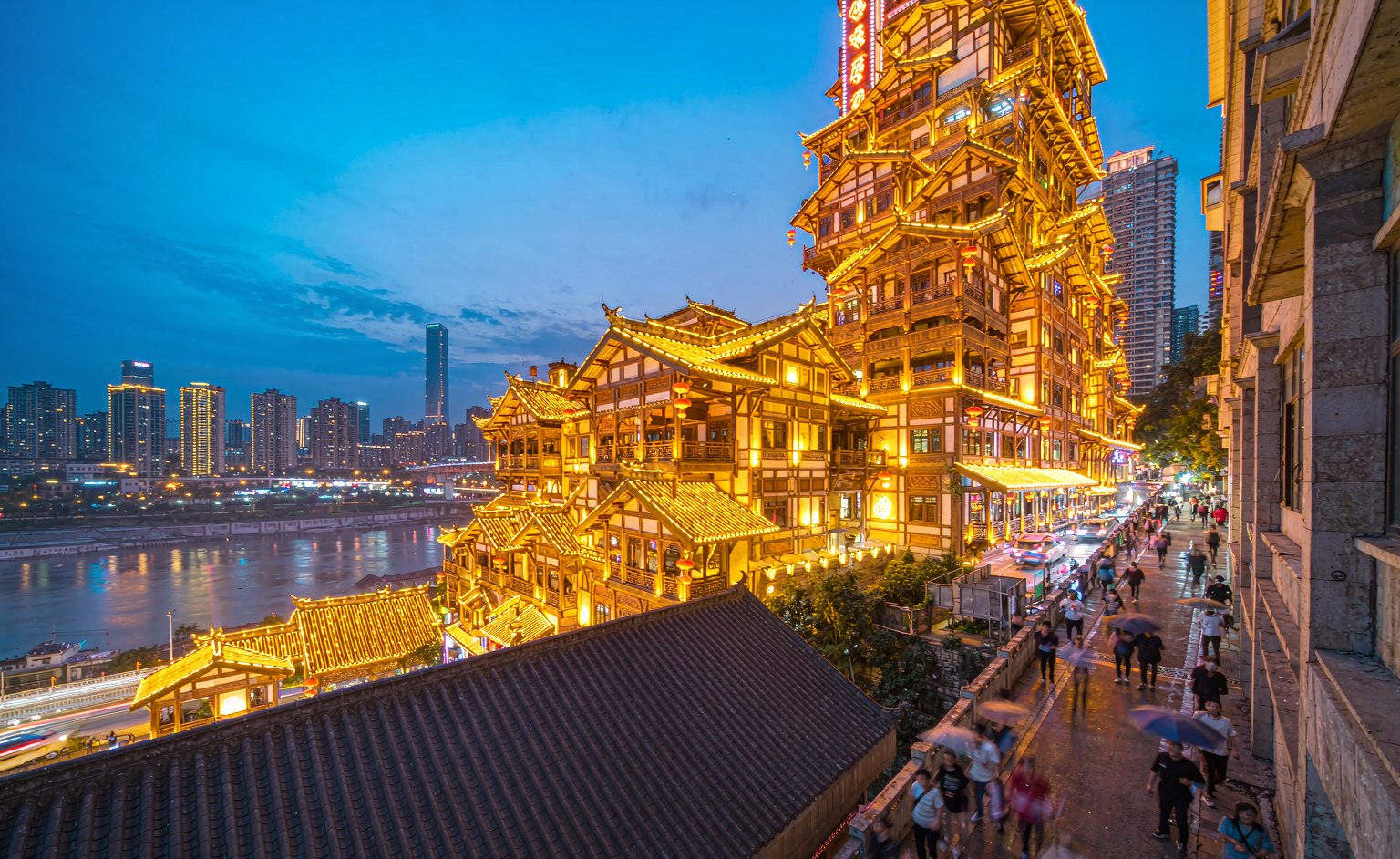
Eleven storeys of timber-framed buildings stacked up a cliff above the Jialing river, lit up after dark. Entirely rebuilt rather than ancient, and all the better for it — it photographs like a film set because it essentially is one.
Fifteen minutes from Liziba by taxi. Perfect for the evening after a consultation day, when you want to be out but not doing anything strenuous.
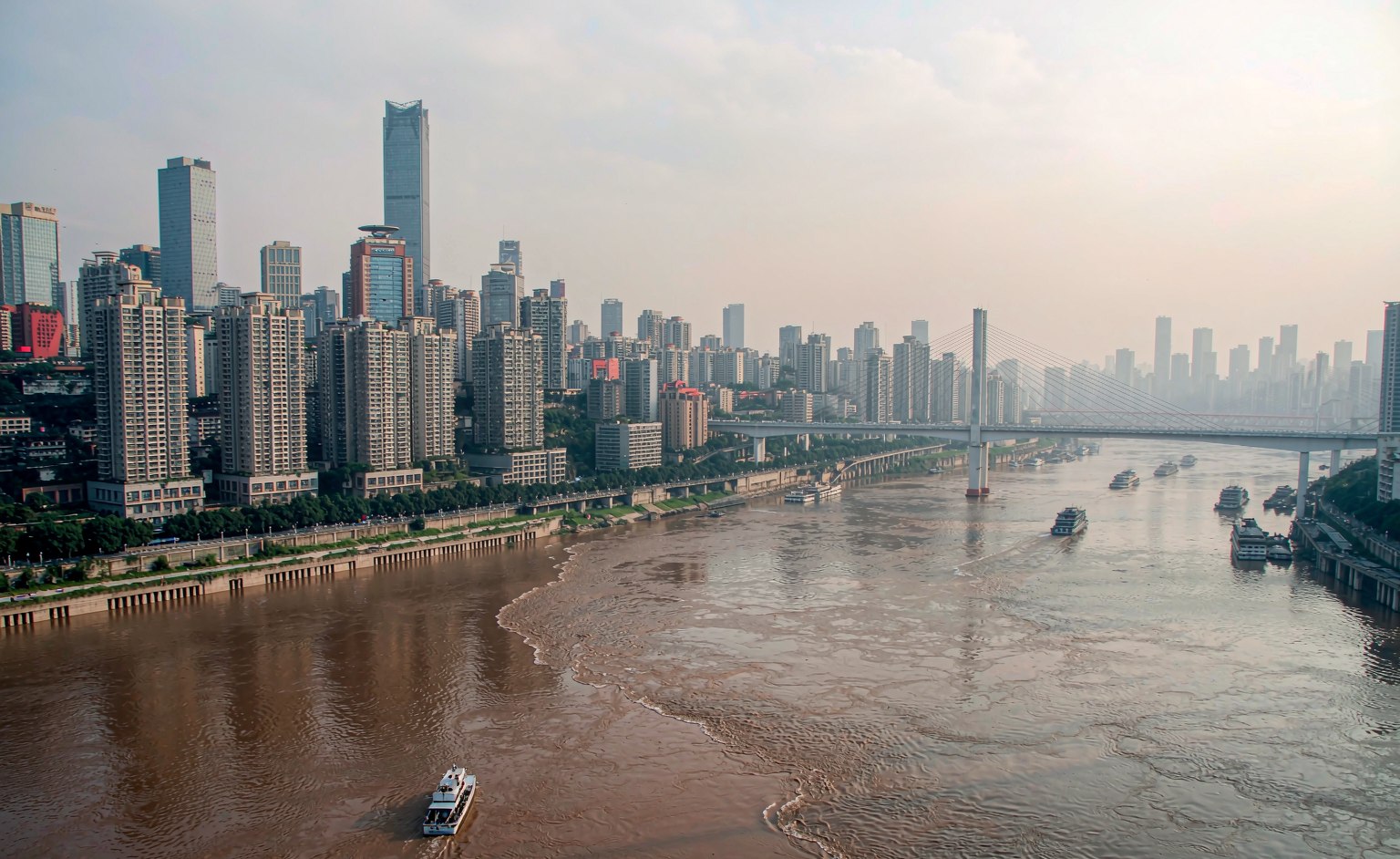
The Jialing arrives green, the Yangtze runs brown, and for a stretch they refuse to mix. From the promenade you can see the seam. It is the clearest possible visual of where you are in China.
Flat, paved and shaded in stretches — the easiest walking of anything on this list, which matters in the days after surgery.
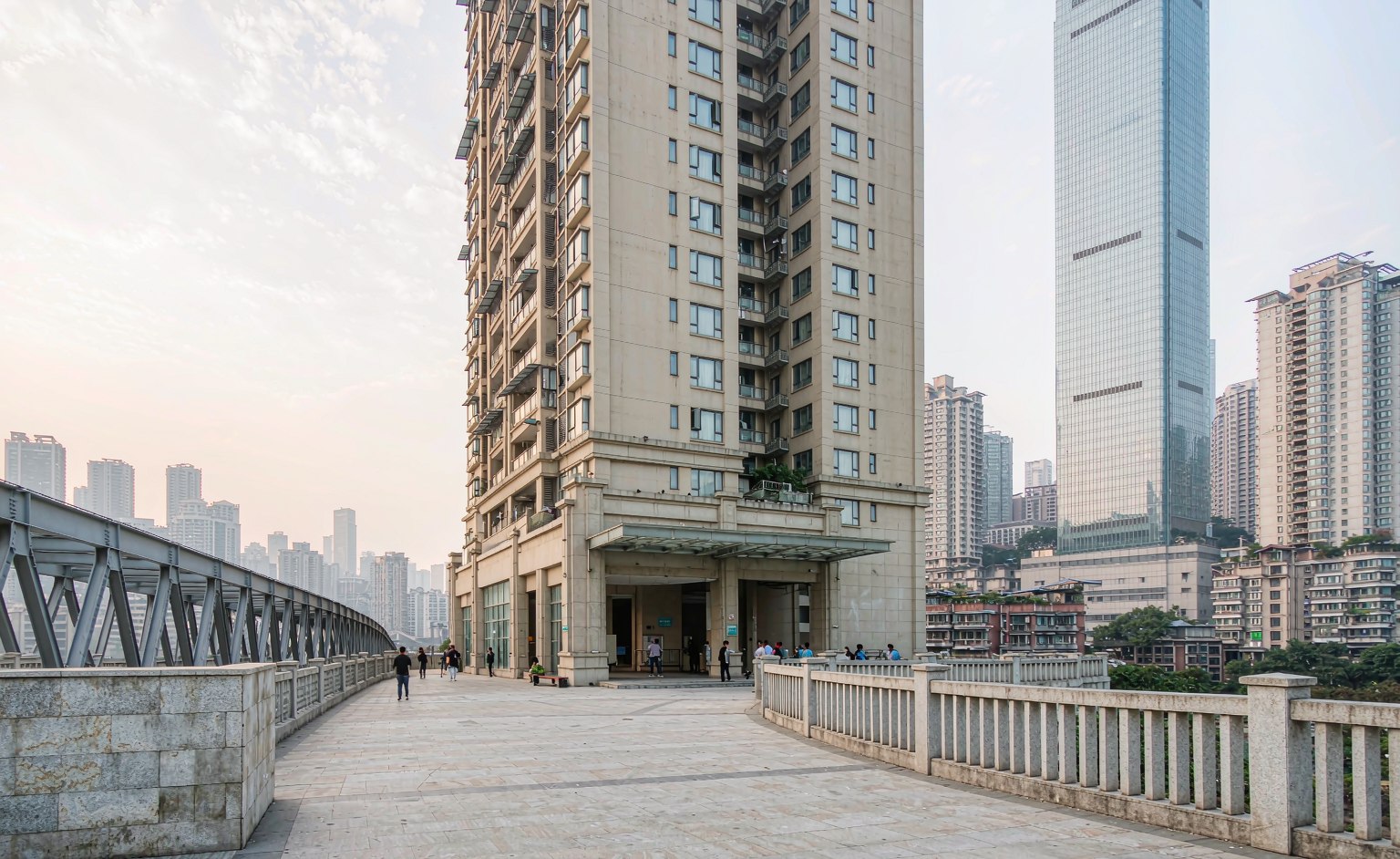
A staircase threaded between apartment blocks, ninety degrees to the street, leading to a viewing deck over the Yuzhong peninsula. The definitive Chongqing photograph, and the one that best explains why maps of this city make no sense.
We list it, and we also tell you when not to attempt it: not in the first three days after implant surgery, when a flight of steps is the last thing you want.
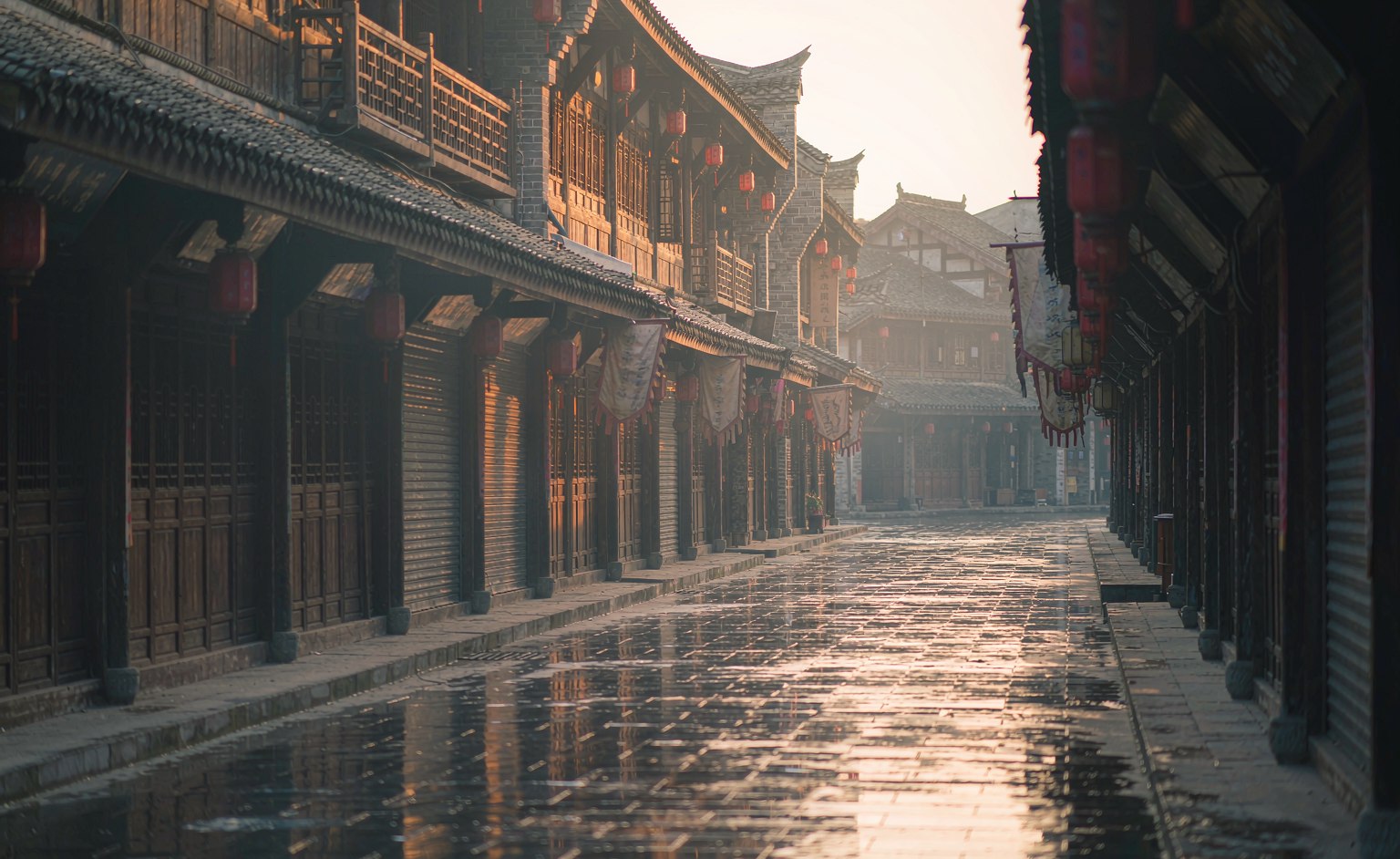
A preserved Qing-era port quarter of grey brick, steep lanes and street food. Busy, commercial and unashamedly touristy — and still worth a half day, particularly on a weekday morning when the lanes are quiet.
Food note for dental patients: this is a chilli-and-crunch kind of place. Good for browsing, less good for eating in the first week.
Directly on People's Square, and the best indoor option when the weather turns — which in Chongqing it does, often and without warning. Strong on the reservoir project and on regional archaeology.
Indoor, seated, air-conditioned, with lifts. On a healing day when you want to leave the hotel but not walk far, this is the answer.
Implants do not finish in a week. The fixture has to fuse with bone before it can carry a tooth, and that takes 30 to 45 days at best. So the honest structure of a dental trip is two visits with a gap in the middle — which is exactly what makes the before-and-after pair work: two photographs, on two trips, weeks apart.
Arrive Chongqing Jiangbei. Hotel check-in with your coordinator.
Before surgery, before anything. Liziba at 07:30 with the reference frame taken and logged.
CBCT, intraoral scan, examination, itemised written plan. No surgery today.
Fixture placed under local anaesthetic or sedation, in the dedicated implant theatre.
Museum, riverside promenade, short flat walks. Nothing strenuous, nothing crunchy.
Clinical check, impressions or scans for the interim, translated records and handover pack.
Healing cap in place. You go home with a date for the second trip.
Back to Chongqing. Review of the healing site and the fit of the restoration.
Permanent crown or bridge seated, occlusion adjusted, bite checked and photographed.
Same platform, same hour, same position. The pair is complete.
One hour by rail if you want a few days before flying out. Or head straight home.
Then, once a year. An implant needs a review and a professional clean roughly annually. You can do that at home — we send your records and imaging to your own dentist in a form they can use. You do not have to come back to China for maintenance, and we will not suggest that you do.
The part nobody puts on a website. Two trips means two sets of flights. For a single implant, the airfare can swallow most of what you saved on the dentistry — that is the arithmetic, and we would rather you did it before you book than after. For a full-arch case, or where you combine the trip with screening in Deyang, the saving holds up comfortably. Ask us to run the numbers for your specific case; we will tell you if it does not add up.
Your coordinator will take the reference frame for you, but there is no reason you cannot do it yourself — and it is more satisfying if you do.
A word on consent. If you post the pair publicly, you are welcome to. If we post it, it is only ever with your written consent, never with your name, never with clinical detail, and it comes down the moment you ask. Photographs of clinical work itself are not published by us at all.
If you want the before-and-after pair, say so in your enquiry and we will build the schedule around the second trip — including a spare Chongqing day at each end for weather.